INTERNATIONAL VAULT
IV's AA&E Purchasing Guide
SRC I–IV storage under DoDM 5100.76: what each branch and federal agency requires, and which International Vault products meet it
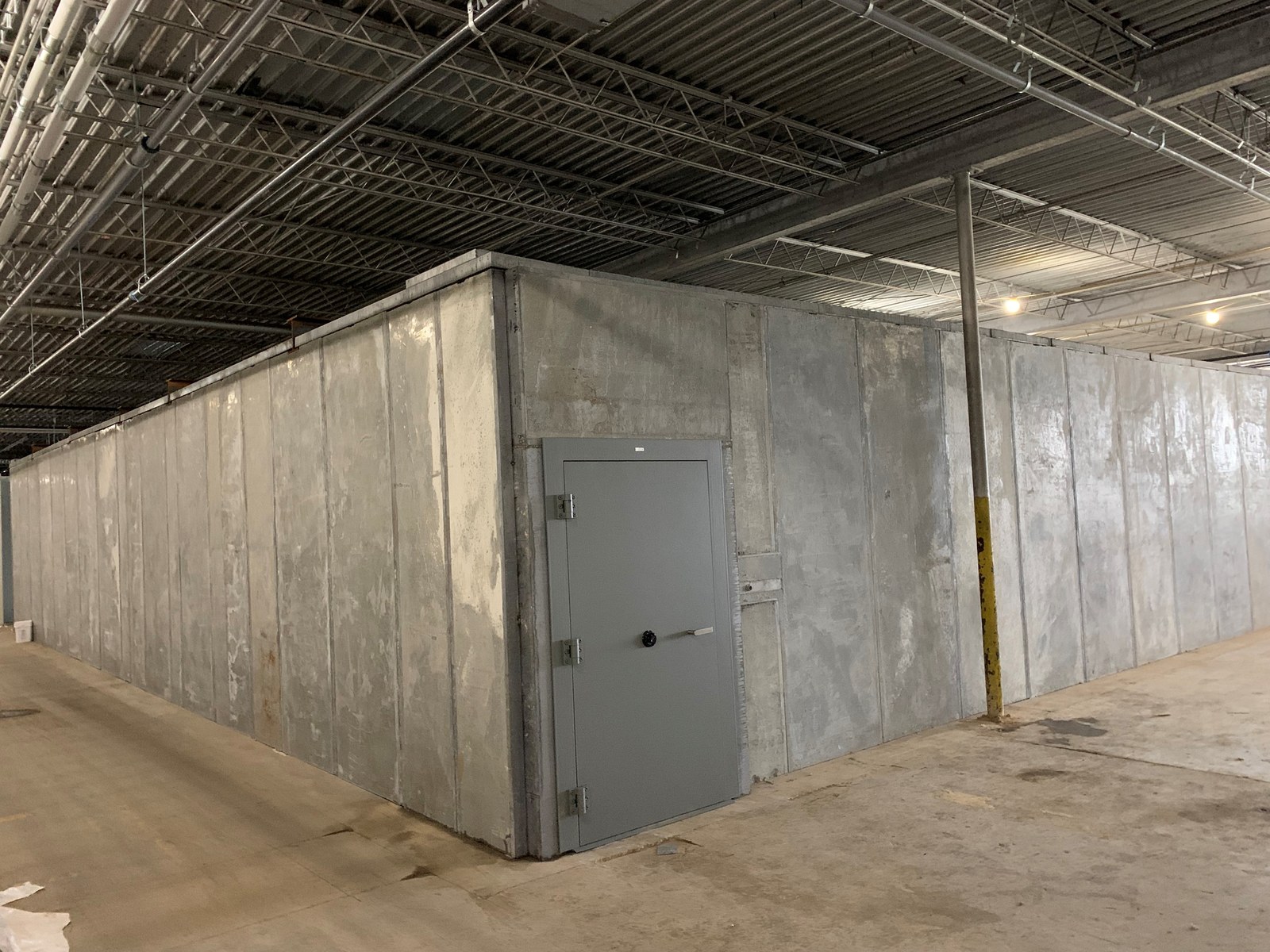
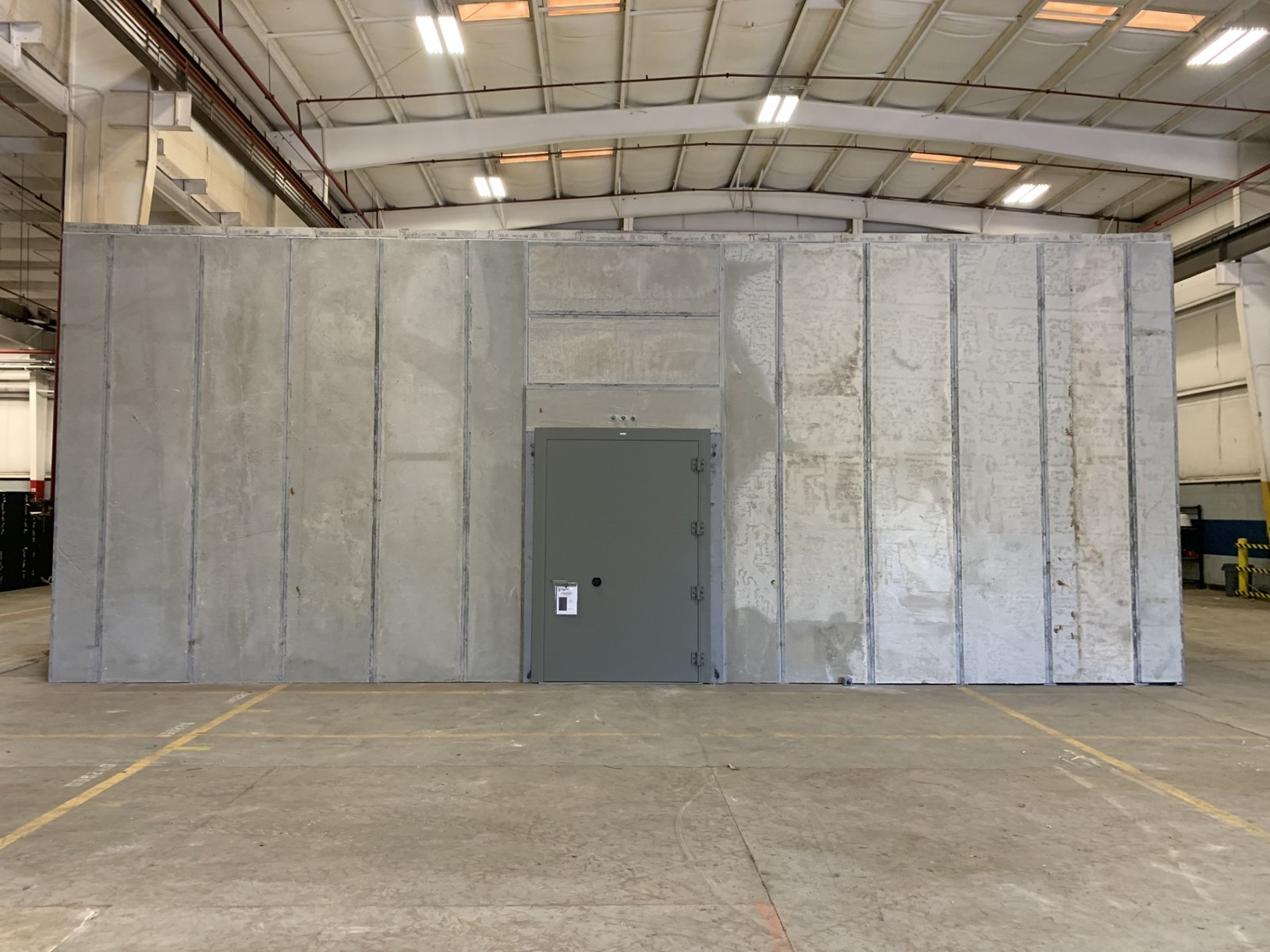
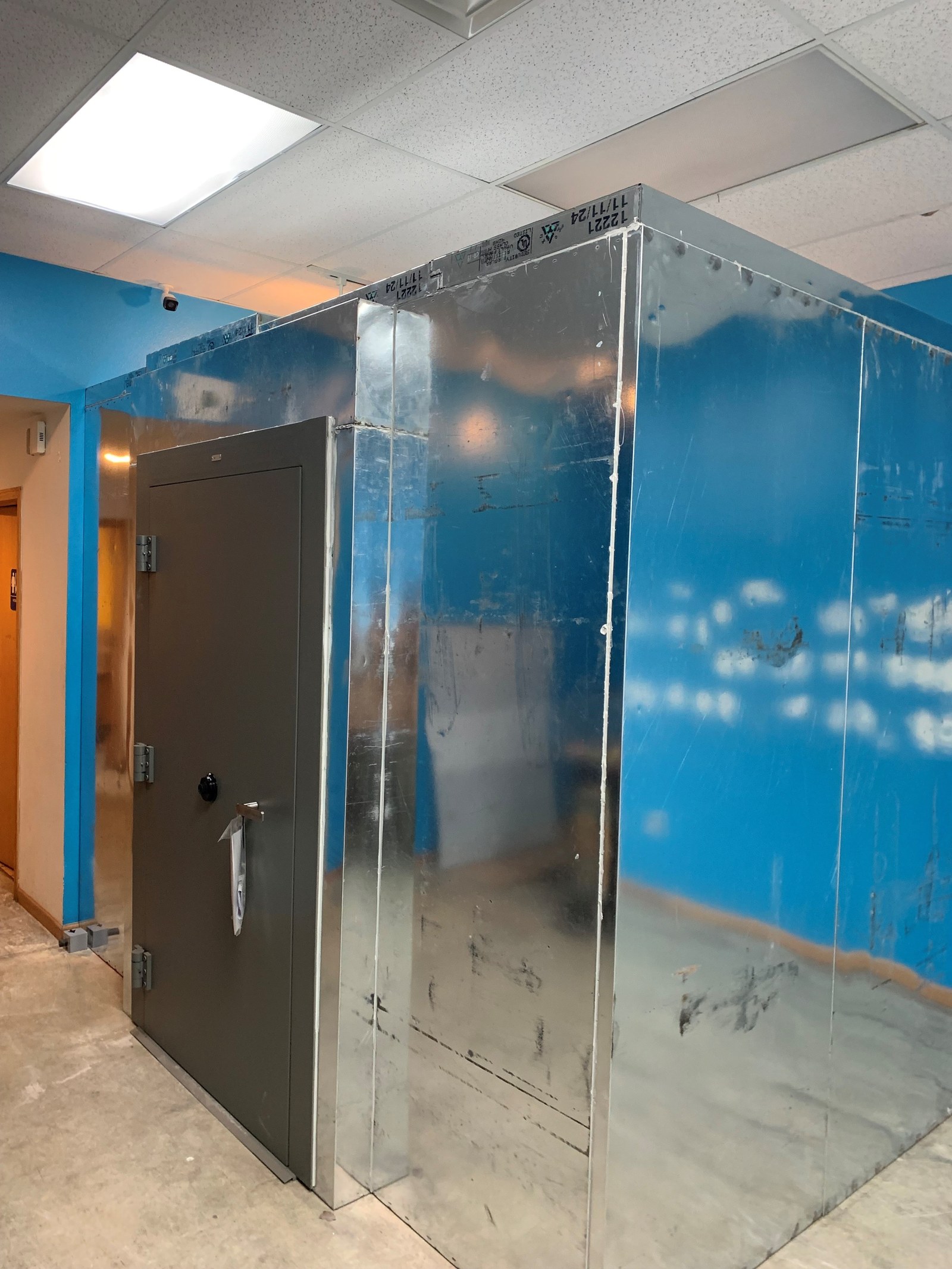
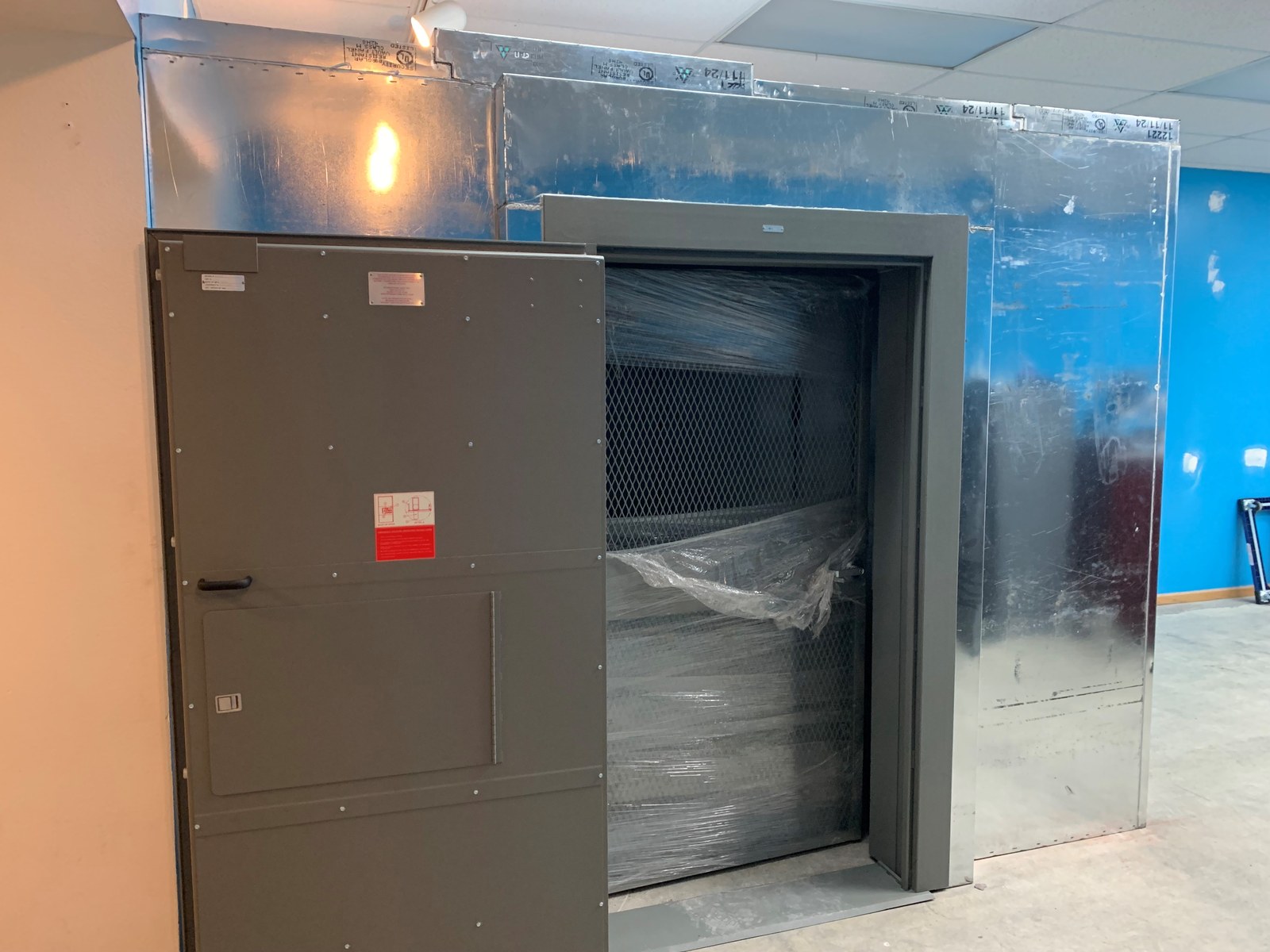
Our AA-V-2737 Modular Vaults with the Scimitar AA-D-600D Class 5 door and our AA-V-2940 Modular Armory Buildings meet DoDM 5100.76 requirements for AA&E storage, SRC I through IV.
Covers: Army · Navy · Marine Corps · Air Force · Space Force · Coast Guard · ATF · DEA · CBP · ICE · Classified storage
Written by the International Vault engineering and federal sales team. Reviewed by Matthew Lask, President, International Vault.
Last updated October 2026 · International Precast, Inc. dba International Vault · Siler City, North Carolina · CAGE 5ATL5
The short answer
• Compliant, SRC I through IV. Our AA-V-2737 Modular Vaults with the Scimitar AA-D-600D Class 5 door and our AA-V-2940 Modular Armory Buildings meet DoDM 5100.76 requirements for AA&E storage, SRC I through IV. DoDM 5100.76 lists AA-V-2737 modular vaults with AA-D-600D doors for unit-level storage of SRC I–III missiles and rockets and all SRC of A&E (Encl. 6, para 6.b.(3)), and AA-V-2940 assembled armory vaults for SRC II–IV arms (Encl. 5, para 2.g.(1)) and unit-level SRC I–III missiles and rockets and all SRC of A&E (Encl. 6, para 6.b.(2)).
• Built for armory and classified storage. GSA AA-V-2737 modular vault panels were designed for both armory/AA&E and classified-material storage.
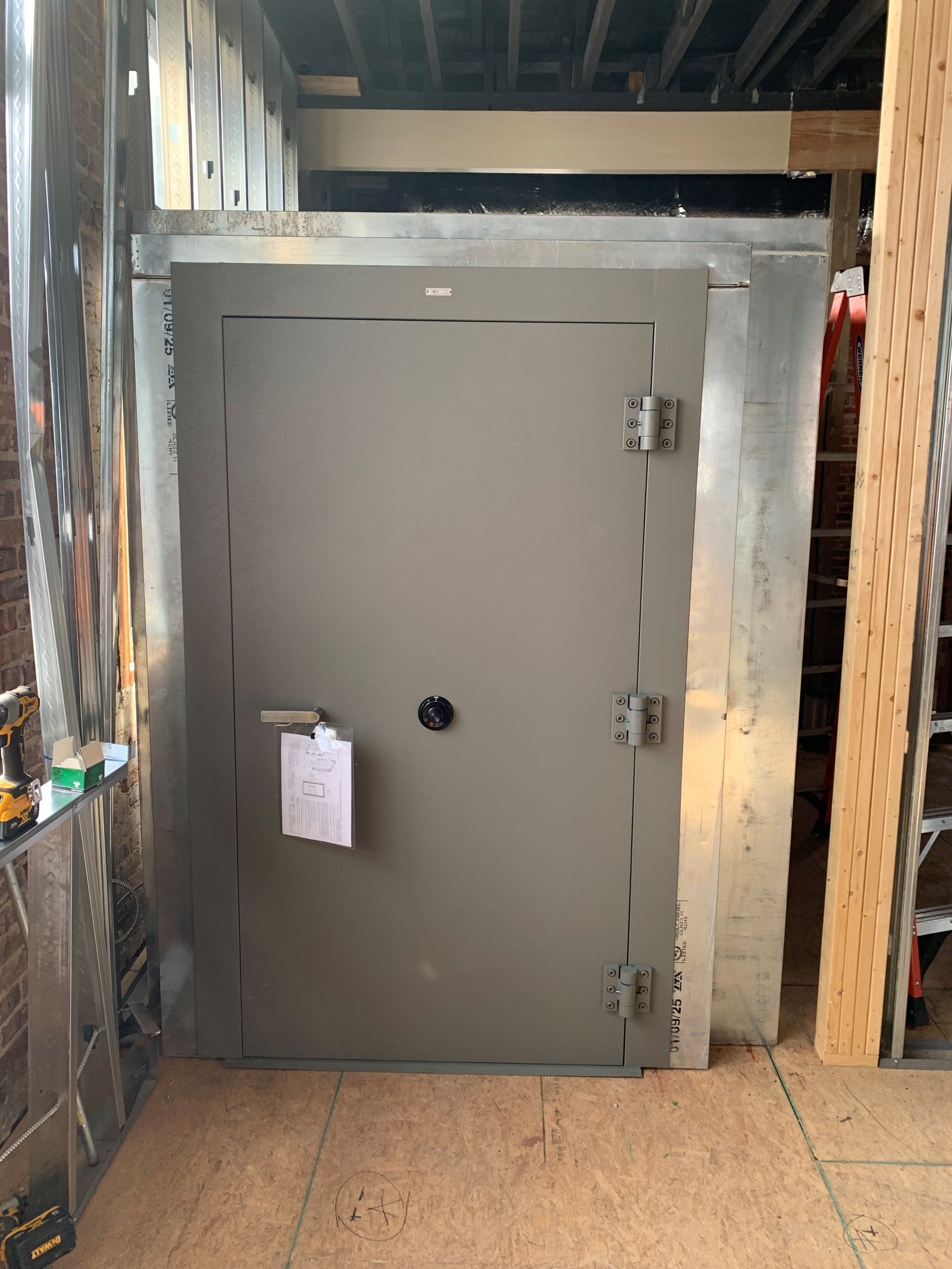
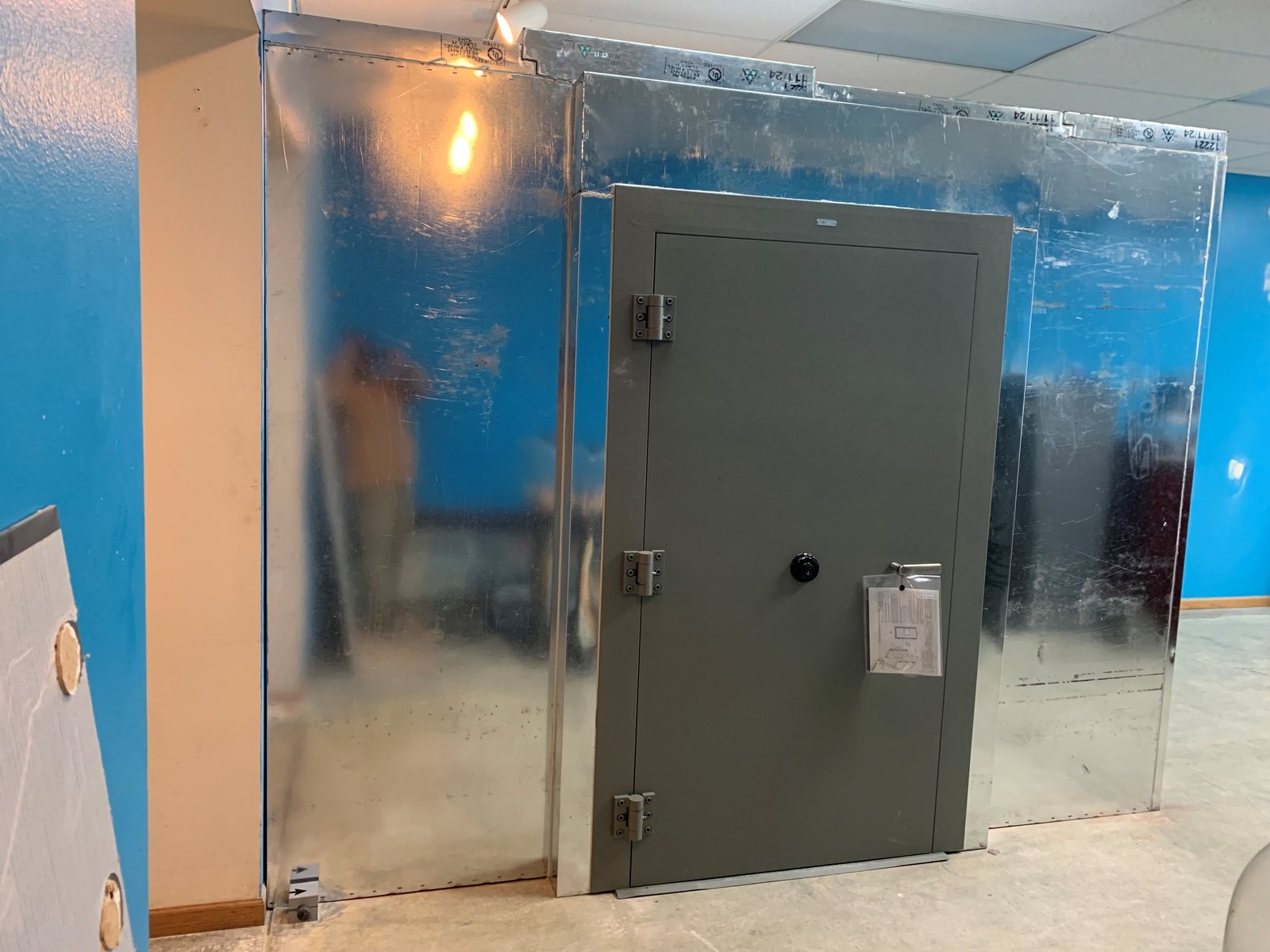
• Our Scimitar door is the AA&E door. The International Vault Scimitar is our GSA Class 5 door built to AA-D-600D, supplied on our AA-V-2940 Modular Armory Buildings and AA-V-2737 modular vaults, in Class 5-A (armory, standard for arms storage) and Class 5-V (vault).
• 15 minutes of forced-entry protection. Our AA-V-2940 Modular Armory Building is rated for exterior use and a minimum of 15 minutes against multilevel tool attack, above DoD's 10-minute forced-entry benchmark for AA&E facilities.
• DoD sets the rules. The single DoD-wide standard is DoD Manual 5100.76, Physical Security of Sensitive Conventional Arms, Ammunition, and Explosives (April 17, 2012, Incorporating Change 2, October 5, 2020). Each Service implements it and may add requirements.
• Built to work with the installation's security system. Our products are designed to integrate with the intrusion detection, lighting, key control, security checks, response force, and explosives-safety siting that each installation provides by SRC and Service.
DoDM 5100.76 compliance summary
| Product | SRC I | SRC II | SRC III | SRC IV |
|---|---|---|---|---|
| AA-V-2737 Modular Vault with Scimitar AA-D-600D Class 5 door | ✓ Compliant Encl. 6, para 6.b.(3) |
✓ Compliant Encl. 6, para 6.b.(3); Encl. 5, paras 2.e, 9.a |
✓ Compliant Encl. 6, para 6.b.(3); Encl. 5, paras 2.e, 9.a |
✓ Compliant Encl. 6, para 6.b.(3); Encl. 5, paras 2.e, 9.a |
| AA-V-2940 Modular Armory Building with Scimitar Class 5-A door | ✓ Compliant Encl. 6, para 6.b.(2) |
✓ Compliant Encl. 5, para 2.g.(1); Encl. 6, para 6.b.(2) |
✓ Compliant Encl. 5, para 2.g.(1); Encl. 6, para 6.b.(2) |
✓ Compliant Encl. 5, para 2.g.(1); Encl. 6, para 6.b.(2) |
Citations are to DoDM 5100.76 (Change 2, October 5, 2020). SRC I covers missiles, rockets, and their ammunition and explosives; arms begin at SRC II (Encl. 7). Compliance is based on GSA testing and approval of our products to AA-V-2737, AA-D-600D, and AA-V-2940.
In this guide
- Who Wrote This Guide, and Who Is It For?
- What Is a Security Risk Category (SRC)?
- Which Regulations Govern AA&E Storage in Each Branch?
- What Applies to Every SRC?
- What Does Each SRC Require?
- Which International Vault Products Meet These Requirements?
- What Do DoD Contractors Need? (DoDM 5100.76, Enclosure 9)
- How Do Explosives Safety and Siting Affect My Project?
- Which Related Standards Should I Know?
- Federal Agency Requirements: What Do ATF, DEA, CBP, ICE, and Classified Storage Require?
- Buyer FAQ
- How Do DoD Buyers Purchase from International Vault?
- References
1. Who Wrote This Guide, and Who Is It For?
Our AA-V-2737 Modular Vaults with the Scimitar AA-D-600D Class 5 door and our AA-V-2940 Modular Armory Buildings meet DoDM 5100.76 requirements for AA&E storage, SRC I through IV. DoDM 5100.76 lists AA-V-2737 modular vaults with AA-D-600D doors for SRC I storage (Encl. 6, para 6.b.(3)), and AA-V-2940 assembled armory vaults for SRC II–IV arms and unit-level SRC I–III missiles, rockets, and A&E (Encl. 5, para 2.g.(1); Encl. 6, para 6.b.(2)). GSA AA-V-2737 modular vault panels were designed for both armory/AA&E and classified-material storage. Our compliance rests on GSA testing and approval: our vault systems are GSA-qualified to AA-V-2737 (minimum 15 minutes against multilevel tool attack), our Scimitar door is GSA-approved to AA-D-600D Class 5, and our Modular Armory Building is qualified to AA-V-2940 (minimum 15 minutes, approved for exterior use), all above DoD's 10-minute forced-entry benchmark.
We have built GSA vaults for more than 30 years. Our modular vault panels, Modular Armory Buildings, and Scimitar doors are made at our plant in Siler City, North Carolina, and our own crews install them. We hold CAGE code 5ATL5 and a GSA contract, with 20 National Stock Numbers on GSA Advantage.
We wrote this guide for the people who plan and buy AA&E storage: installation physical security officers, engineers, contracting officers, and unit leaders. These are the questions they ask us most. Which regulation applies? What does each Security Risk Category require? Which vault and which door? Below, we pull together what DoD, each Military Service, the U.S. Coast Guard, and the federal agencies we build for actually require, and show where our products fit.
AA&E storage requirements come from DoD, not GSA. As GSA's Interagency Advisory Committee on Security Equipment confirmed to us in its January 2023 letter, GSA has no authority to set AA&E storage specifications on its own; DoD sets the requirements for the Military Services, and ATF sets them for civilian organizations. GSA publishes and qualifies the federal specifications that DoD regulations then cite:
- AA-V-2940 was written specifically for armory use, with DoD (Defense Logistics Agency) as a custodian.
- AA-V-2737 modular vault panels were designed for both armory/AA&E and classified-material storage, and AA-D-600D covers both the Class 5-A armory door and the Class 5-V vault door. FED-STD 832 covers vaults for classified information and weapons, and DoD AA&E regulations (DoDM 5100.76, AR 190-11, and OPNAVINST 5530.13D) cite these specifications by name.
2. What Is a Security Risk Category (SRC)?
A Security Risk Category (SRC) is the DoD rating that determines how much physical protection an AA&E item requires. DoDM 5100.76, Enclosure 7, places each item in SRC I (highest risk) through SRC IV (lowest risk) based on four factors: utility, casualty or damage effect, adaptability, and portability. In plain terms, the rating reflects how attractive and usable the item would be to a criminal or terrorist. Items that score as non-sensitive are uncategorized (CAT-U) and are protected under each DoD Component's own policy. The Army uses the term "Category I–IV" for the same levels.
SRC I is defined directly rather than scored: it covers man-portable missiles and rockets that are ready to fire or stored with their launcher. There are no SRC I small arms; arms begin at SRC II. Major arms parts (barrels, major subassemblies) are protected at least as SRC IV, and a frame or receiver is stored at the SRC of the complete weapon. The manual's examples are for general reference; the official SRC of any item comes from supply and logistics catalog data.
| SRC | Risk | Arms (examples) | Missiles, rockets, ammunition and explosives (examples) |
|---|---|---|---|
| SRC I | Highest | None (arms begin at SRC II) | Man-portable missiles and rockets ready to fire or stored with launcher: Stinger, Javelin, Dragon, LAW (66 mm), SMAW rocket (83 mm), AT4 (84 mm), and their complete rounds |
| SRC II | High | M16/M4 rifles; light automatic weapons through M249, M2, and MK19; SRC II frames and receivers; silencers and suppressors | TOW and HYDRA-70; high-explosive and white phosphorus hand/rifle grenades; antitank/antipersonnel mines ≤50 lb; C-4, military dynamite, and TNT ≤100 lb; missile/rocket warheads under 50 lb |
| SRC III | Moderate | Mortar tubes through 81 mm; single-shot grenade launchers; rocket/missile launchers ≤100 lb; flame throwers; Stinger grip stock and launch tube; TOW launcher and Javelin CLU | HELLFIRE; .50 caliber and larger with explosive-filled projectile; incendiary grenades; blasting caps; detonating cord; bulk explosives; supplementary charges; warheads 50–100 lb |
| SRC IV | Lowest | Handguns; shotguns; bolt-action and semi-automatic shoulder-fired weapons; weapon barrels; recoilless rifles through 106 mm | Ammunition with non-explosive projectiles; fuzes (other than for HE grenades); illumination, smoke, and CS grenades; riot control agents (≤100 lb package); incendiary destroyers |
| CAT-U | Non-sensitive | None | Items scoring 13–16 on the risk-factor tables, or generally over 100 lb unpacked; protected under DoD Component policy |
Source: DoDM 5100.76, Enclosure 7 (SRC examples and risk-factor tables).
3. Which Regulations Govern AA&E Storage in Each Branch?
3.1 What does DoDM 5100.76 cover?
DoD Instruction 5100.76 (February 28, 2014, Incorporating Change 2, October 19, 2020) sets DoD policy for safeguarding AA&E. DoD Manual 5100.76 (April 17, 2012, Incorporating Change 2, effective October 5, 2020) prescribes the minimum physical security standards for SRC I–IV AA&E in the custody of any DoD Component, DoD contractor, or foreign military sales and security cooperation program. DoDM 5100.76 replaced the earlier DoD 5100.76-M (2000), which is why many documents still say "5100.76-M."
The manual applies directly to every DoD Component. Each Service issues its own implementing regulation, and DoD Components may add protective measures (never fewer) as long as they do not conflict with DoD explosives safety standards. DoDM 5100.76 does not cover AA&E aboard USS and USNS vessels; the Navy addresses afloat storage separately.
| Branch | Governing AA&E regulation | Current edition | Notes |
|---|---|---|---|
| Army | AR 190-11, Physical Security of Arms, Ammunition, and Explosives | 17 January 2019 (listed active by the Army Publishing Directorate) | Related: AR 190-13, The Army Physical Security Program (15 April 2026) |
| Navy | OPNAVINST 5530.13D, U.S. Navy Conventional Arms, Ammunition and Explosives Physical Security Policy Manual | 28 May 2021 | Covers ashore and afloat; program managed by the Naval Ordnance Safety and Security Activity (NOSSA) |
| Marine Corps | MCO 5530.14A, Marine Corps Physical Security Program Manual (Chapter 8, AA&E) | 5 June 2009 (listed current) | Updated in part by MARADMIN 349/21 and MARADMIN 508/25; DON policy in SECNAVINST 5500.35 |
| Air Force | DoDM 5100.76_DAFMAN 31-101, Volume 2, Physical Security of Sensitive Conventional AA&E | 16 July 2025 (DAF supplement integrated with DoDM 5100.76, Change 2) | Applies to the USAF, USSF, AFR, and ANG; supersedes the February 20, 2020 Air Force manual |
| Space Force | Same DAF publication as the Air Force | 16 July 2025 | The manual names the U.S. Space Force and field commands (FLDCOMs) in its applicability |
| Coast Guard | COMDTINST M5530.1C, Physical Security and Force Protection Program; Ordnance Manual, COMDTINST 8000.2G | M5530.1C dated 17 December 2001, as updated by ACN 155/19; 8000.2G current as of 2025 | Department of Homeland Security service; M5530.1C is not publicly released |
Sources: Army Publishing Directorate; Department of the Navy Issuances; Marine Corps Publications Electronic Library; DAF e-Publishing; U.S. Coast Guard directives and ALCOAST/ACN messages (see References).
3.2 What does each Service add to DoDM 5100.76?
Every Service starts from DoDM 5100.76. Most then add something. These are the additions we see affect storage projects most often.
U.S. Army: AR 190-11
- Engineer-verified construction. Qualified engineers verify each AA&E storage structure on DA Form 4604, Security Construction Statement. The form is posted inside the facility and revalidated every 5 years.
- Arms room criteria (Appendix G). New arms facilities use 8-inch reinforced concrete walls (No. 4 bars at 9 inches on center, each face), reinforced concrete roofs at least 6 inches thick, 6-inch reinforced floors, and a GSA-approved Class 5 armory door per AA-D-600D. AR 190-11 discourages the Class 5 vault door (electromechanical lock) for arms rooms.
- Modular vaults. AA-V-2737 modular vaults with GSA Class 5 doors are an approved alternative for Category II arms when protected by IDS or 24-hour armed surveillance, with security patrol checks at least every 8 hours. A modular vault used outdoors must be designed for exterior use and receives the same controls as a portable armory: IDS, checks at least every 8 hours, 0.2 foot-candle lighting, and high-security locks.
- Category I and II ammunition and explosives. Doors are secured with a high-security padlock and hasp plus a secondary padlock. Category I keys follow a two-person (A and B lock) rule.
- Inspections. AA&E physical security inspections every 18 months, managed in the Security Management System (Counter Measures).
U.S. Navy: OPNAVINST 5530.13D
- IDS approval and design. IDS for CNIC installations must be approved in writing by CNIC N3 before purchase. Alarms report to a continuously manned control center. Backup power is at least 8 hours ashore. Systems are tested monthly (quarterly for bulk storage), with at least one unannounced alarm exercise per year.
- Anti-intrusion barrier (AIB) required on active doors of SRC I and II ammunition and explosives facilities secured with high-security padlocks and hasps.
- Acceptable ashore structures include DoD-approved earth-covered magazines, TDS-2078-SHR Type II magazines, and GSA-approved AA-V-2737 modular vaults. New construction and structural upgrades must provide 10 minutes of forced-entry delay against the medium threat defined in MIL-HDBK-1013/1A.
- Armory doors: a GSA Class 5 weapons vault door, or a fabricated door of 2-inch hardwood with 1/4-inch steel plate or 3/8-inch steel. When the armory is an issue point, a day gate with a weapons issue port is required.
- Perimeter and records. New fences use 7-foot fabric, with clear zones of 20 feet outside and 30 feet inside. High-security locks or cores are rotated annually. Physical security surveys are done every 12 months ashore and every 6 months afloat. Many records are kept 3 to 6 years.
U.S. Marine Corps: MCO 5530.14A and MARADMINs
- MCO 5530.14A, Chapter 8, covers AA&E security, with appendices for security risk categories (H), AA&E screening (I), AA&E facility minimum construction requirements (J), and surveillance requirements (K).
- MARADMIN 508/25 (October 2025): AA&E facilities are designated restricted areas in writing. A physical security survey is completed at least every 12 months by a certified Physical Security Specialist from PMO/MCPD, using NAVMC 11121. Commands submit a corrective action plan within 90 days, and units certify compliance annually under FY2022 NDAA section 363.
- MARADMIN 349/21 adds AA&E accountability and training requirements. Waivers and exceptions route to the Deputy Commandant for Plans, Policies, and Operations.
U.S. Air Force: DoDM 5100.76_DAFMAN 31-101, Volume 2
- The Department of the Air Force publishes DoDM 5100.76 with its own requirements integrated into the same document (DoDM 5100.76_DAFMAN 31-101, Volume 2, 16 July 2025), so DoD and DAF requirements are read together. DAF additions are marked "(ADDED)(DAF)".
- DAF additions relevant to storage structures: two levels of IDS (duress alarms do not count) on each bulk-storage magazine or facility holding Category I/II AA&E unless continuously manned or under constant surveillance (T-0); IDS for Category III/IV bulk storage set by the air component command or MAJCOM; annual inspections of facilities storing Category I–III AA&E; annual penetration exercises; and a limit of 29 Category IV weapons per room in a GSA Class 5 container without IDS.
- DAFMAN 21-201 requires IDS-protected storage for SRC I and II munitions (a T-0 requirement). It allows IDS to be required for SRC III and IV under the DAF supplement or command supplements, and requires documented security deviations.
- Non-standard IDS for Air Force sites is approved through HQ Air Force Security Forces Center (DoDM 5100.76, Enclosure 4).
U.S. Space Force
- We have not found a separate Space Force AA&E storage manual. DoDM 5100.76_DAFMAN 31-101, Volume 2 (16 July 2025) states that it applies to the U.S. Space Force, and its responsibilities extend to Space Force field commands (FLDCOMs), so Space Force installations follow it and DAF Security Forces guidance. Confirm local requirements with the host installation's Security Forces physical security office.
U.S. Coast Guard
- The Coast Guard is a Department of Homeland Security service. DoDM 5100.76 is written for DoD Components, so Coast Guard AA&E storage is governed by Coast Guard directives: COMDTINST M5530.1C (physical security and force protection; updated by ACN 155/19, which adopted the Interagency Security Committee Risk Management Process for facility assessments) and the Ordnance Manual, COMDTINST 8000.2G, which requires every unit with firearms or munitions to keep an Ordnance Program and undergo ordnance safety inspections.
- Coast Guard units use the same high-security lock hardware supplied through the DoD Lock Program. Because M5530.1C is not publicly released, Coast Guard projects should confirm storage criteria with the unit's servicing armory and chain of command. If the AA&E is stored on a DoD installation, also coordinate with the host physical security office.
4. What Applies to Every SRC?
These DoDM 5100.76 requirements apply regardless of SRC (Service rules may be stricter):
- Construction. AA&E facilities should meet or exceed 10 minutes of forced-entry resistance against an unlimited supply of hand and battery-operated tools. New construction must provide it and is designed per DoDM 5100.76, DoD explosives safety standards, and MIL-HDBK-1013/1A. GSA-approved containers and vaults are recognized alternatives. Qualified engineers and physical security specialists review designs before contract award and acceptance. (Encl. 3, para 1.d; Encl. 5, para 9)
- Planning. A local threat analysis and vulnerability assessment is completed before a facility is occupied or renovated, and updated annually. (Encl. 4)
- Explosives safety. Ammunition and explosives are stored in structures that meet DoD explosives safety standards, and security measures may not conflict with them. (Encl. 6, para 1.a; Encl. 2, para 4.e)
- Restricted area and access control. AA&E facilities are posted as restricted areas. Unescorted access requires written authorization, access is recorded, and access records are kept 1 year. (Encl. 4, paras 8–9)
- Key, combination, and lock control. AA&E keys are kept separate from other keys. A key and lock custodian is appointed who is neither an armorer nor a person with unaccompanied access. Master keying and keying alike are prohibited. Keys, locks, and combinations are inventoried semiannually by a disinterested person, and locks or cores are replaced if keys are lost. (Encl. 4, para 10)
- Intrusion detection, where required. A DoD-standardized or approved system designed to UFC 4-021-02 and UL 2050, with interior point sensors on doors and openings plus interior volumetric sensors. It uses line supervision or two independent transmission paths, has at least 8 hours of backup power, and is tested monthly (quarterly for bulk storage). Alarm logs are kept at least 90 days, and alarms annunciate at a central station that can dispatch an armed response. (Encl. 4, para 6)
- Security forces. Non-duty-hour checks are recorded and kept 90 days. Response to an alarm should be as soon as possible and not more than 15 minutes. Security forces carry two-way radios, and CCTV is encouraged for alarm assessment. (Encl. 4, para 7)
- Lighting and communications. Security lighting of at least 0.2 foot-candles (2 lux) at ground level for arms storage, with switches accessible only to authorized persons. Storage areas have primary and backup communications using different modes. (Encl. 5, para 2.h; Encl. 6, para 5)
- Doors (non-Class 5). Where a GSA Class 5 door is not used, doors are 1¾-in solid hardwood with a 12-gauge steel face, or 14-gauge hollow metal with internal stiffeners no more than 6 in apart, secured with a high-security padlock (MIL-DTL-43607) and hasp (MIL-DTL-29181) or an internal locking device. (Encl. 5, para 2; Encl. 6, para 6.c)
- Racks and containers weighing less than 500 lb are fastened to the structure or grouped to exceed 500 lb. (Encl. 5, para 2.b)
- Inspections and deviations. AA&E storage inspections at intervals not exceeding 18 months (the Navy and Marine Corps survey every 12 months). Deficiencies corrected within 90 days need compensatory measures but no waiver. Waivers last 12 months (one 12-month extension), exceptions are reviewed every 3 years, and blanket waivers are not allowed. (Encl. 3, paras 2 and 4)
5. What Does Each SRC Require?
The table below summarizes the DoD minimums by SRC. "Unit level" means basic-load or training quantities kept by a unit; "bulk" means depots and ammunition supply points. Where a Service adds to the DoD minimum, that addition is noted in Section 3.2.
| Requirement | SRC I | SRC II | SRC III | SRC IV |
|---|---|---|---|---|
| Storage options | Bulk: explosives-safety-compliant magazines in a fenced area. Unit level: compliant arms room; AA-V-2940 outdoor armory vault; AA-V-2737 indoor modular vault with AA-D-600D door; GSA Class 5 weapons container; secured vehicle under constant surveillance. No permanent storage at Guard/Reserve units; none at ROTC. |
Arms: AA-V-2940; TDS-2078-SHR magazine; NSWC 3046-93-2 steel armory; NSWC 3046-93-1 steel magazine; compliant arms room. Missiles/A&E: same unit-level options as SRC I. Not at ROTC or gun clubs. |
Same options as SRC II. Pre-engineered magazines (TDS-2078-SHR, NSWC 3046-93-1) also allowed for SRC III/IV A&E when existing facilities do not meet criteria. | Same as SRC III. Small quantities of SRC IV arms may be kept in a GSA Class 5 container by small units (Component approval). ATF Type II magazines only within tested limits. |
| Construction | All SRCs: at least 10 minutes' forced-entry resistance against unlimited hand and battery-operated tools (new construction, per DoDM 5100.76, DoD explosives safety standards, and MIL-HDBK-1013/1A). A&E structures must also meet explosives safety standards. Upgrade funding priority: SRC I, then SRC II, then SRC III/IV. | |||
| Doors and locks | GSA Class 5 armory vault door (AA-D-600D; built-in lock), or 1¾-in reinforced wood or hollow-metal door with high-security padlock (MIL-DTL-43607) and hasp (MIL-DTL-29181) or internal locking device (ILD). New SRC I/II missile storage: consider ILD or Class 5 door. | Same as SRC I. | Same door construction; high-security padlock and hasp or ILD (or Class 5 door). | Same as SRC III. |
| IDS / alarm | Required on every structure unless continuously manned or under constant surveillance. | Required for arms and A&E unless continuously guarded or under constant surveillance. Portable armories: IDS or constant armed guard. | Arms: set by the DoD Component. SRC III missiles and A&E: not required. |
Arms: set by the DoD Component. A&E: not required. Small-quantity Class 5 container: exempt. |
| Lighting | Exterior building and door lighting required; 0.2 fc (2 lux). | Same as SRC I. Portable armories: exterior lighting required. | Arms: required (0.2 fc). A&E: set by the DoD Component. |
Same as SRC III. Small-quantity Class 5 container: exempt. |
| Perimeter | A&E storage areas: 6-ft chain link (9-ga, 2-in mesh); clear zones 12 ft outside / 30 ft inside (Navy: 20 ft / 30 ft; new Navy fence 7 ft). | Same as SRC I for A&E. Arms: installation commander decides. | Set by the DoD Component or installation commander. | Same as SRC III. |
| Key and lock control | Keys and combinations in a GSA Class 5 security container or Class 5 weapons container. | Same as SRC I. | Container of at least 12-gauge steel with GSA-approved (FF-L-2937) or UL 768 Group 1 built-in combination lock. | Same as SRC III. |
| Security checks | Alarmed structures: armed, supervised security force checks at random at least once daily during non-duty hours. | Same as SRC I. Portable armories: checks at least every 8 hours. | Without IDS: checked at least once daily during non-duty hours. A&E with IDS: daily check not required. | Same as SRC III. Small-quantity Class 5 container: exempt from patrols. |
| Guards / response | All SRCs: armed response force able to respond as soon as possible and not more than 15 minutes after an alarm; alarms annunciate at a central control station; two-way radios for security forces; primary and backup communications for storage areas. | |||
| Inventory (unit level) | SRC I missiles/rockets and SRC II–IV arms: 100% count by serial number monthly. SRC II–III missiles/rockets: quarterly. All SRC A&E: monthly count of unsealed containers. Installation level: semiannual. Depot level: annual. | |||
Sources: DoDM 5100.76, Encl. 3 (paras 1, 4, 5), Encl. 4 (paras 6, 7, 10 and Table 1), Encl. 5 (para 2), Encl. 6 (paras 2–7), Encl. 8. Navy perimeter values: OPNAVINST 5530.13D, Ch. 2.
6. Which International Vault Products Meet These Requirements?
6.1 What do we make for AA&E storage?
| Product | Specification / rating | Where DoD and the Services cite it | Key features |
|---|---|---|---|
| International Vault AA-V-2940 Modular Armory Building (pre-assembled, outdoor) | GSA Federal Specification AA-V-2940, Vault System, Armory, Assembled (February 20, 2008); UL 608 Class M; GSA Qualified Products List requirement | DoDM 5100.76 Encl. 5, para 2.g.(1): SRC II–IV arms. Encl. 6, para 6.b.(2): unit-level SRC I–III missiles/rockets and all SRC of A&E (when explosives safety requirements are met). |
Six-sided, steel-reinforced precast concrete; minimum 15 minutes against multilevel tool attack (panels and joints); approved for exterior use; factory-assembled and moved as a single unit, highway-transportable; enclosed vestibule protecting the door and lock; fitted with our Scimitar GSA Class 5-A armory door per AA-D-600D (spec opening 48 × 82 in single leaf, 88 in double leaf, 6-in frame engagement) and day gate; 1-in conduit openings and barriered utility panel for HVAC and IDS cabling; MIL-STD-810F environmental tests (cold, heat, rain, sand/dust, icing). |
| International Vault AA-V-2737 modular vault panels (MegaCrete, MacroVault, Lightweight Vault) | GSA Federal Specification AA-V-2737, Modular Vault System (April 25, 1990, Amendment 3, February 25, 2013) | DoDM 5100.76 Encl. 6, para 6.b.(3): indoor modular vaults with AA-D-600D doors. Encl. 9: contractor facilities. AR 190-11 para 4-2a(3); OPNAVINST 5530.13D Ch. 2 para 3a(3). |
Designed for both armory/AA&E and classified-material storage; indoor modular vault built inside a host building and fitted with our Scimitar AA-D-600D Class 5 door; GSA-qualified to AA-V-2737, which requires a minimum of 15 minutes against multilevel tool attack (above DoD's 10-minute benchmark); scalable and relocatable. For outdoor use, the vault must be designed for exterior applications (Army applies portable-armory controls). |
| International Vault Scimitar AA-D-600D Class 5 Door | GSA Class 5 vault door per Federal Specification AA-D-600D Door, Vault, Security (May 25, 2000) | DoDM 5100.76 Encl. 6, para 6.c.(1)(a); AR 190-11 App. G; OPNAVINST 5530.13D Ch. 2 para 3b(2); the door we supply on our AA-V-2940 (Class 5-A) and AA-V-2737 vaults. | Built-in combination lock, so no separate high-security padlock and hasp is required (DoDM Encl. 6, para 6.c.(3)). We make the Scimitar in both Class 5-A (armory, mechanical lock; the standard choice for weapons and arms storage) and Class 5-V (vault, electromechanical lock). Day gate available. |
Sources: AA-V-2940 (Feb. 20, 2008), paras 1.1, 3.3–3.4; DoDM 5100.76, Encl. 1 refs (ai), (ar), (as) and paras cited; AR 190-11; OPNAVINST 5530.13D; GSA IACSE letter to International Vault (January 2023).
Note: our Excalibur (Gen II) door is a UL 608 door for commercial and non-DoD vaults. It is not used for DoD AA&E/SRC storage.
6.2 What vault do I need for SRC I, II, III, or IV storage?
For SRC I, the answer is short. DoDM 5100.76 lists an AA-V-2737 modular vault with an AA-D-600D door for unit-level SRC I storage (Encl. 6, para 6.b.(3)), and an AA-V-2940 assembled armory vault (Encl. 6, para 6.b.(2)). We build both, with our Scimitar door. The table covers every SRC.
| SRC | AA-V-2940 Modular Armory Building with Scimitar door | AA-V-2737 vault with Scimitar AA-D-600D door | What the installation adds |
|---|---|---|---|
| SRC I | Compliant (Encl. 6, para 6.b.(2)) for unit-level SRC I missiles/rockets and SRC I A&E, sited under explosives-safety rules. | Compliant (Encl. 6, para 6.b.(3)). DoDM lists AA-V-2737 vaults with AA-D-600D doors for unit-level SRC I missiles/rockets and A&E; the Scimitar is our AA-D-600D door. | IDS; armed daily checks; exterior lighting; Class 5 key containers; explosives safety site approval. No permanent storage at Guard/Reserve units. Army: two-person key rule. |
| SRC II | Cited for SRC II arms (Encl. 5, para 2.g.(1)) and unit-level SRC II missiles and A&E. | Cited for unit-level SRC II missiles and A&E. Recognized for Category II arms by AR 190-11 para 4-2a(3). | IDS unless continuously guarded; armed daily checks (at least every 8 hours for portable or exterior units where the Service applies portable-armory controls); lighting. |
| SRC III | Cited for SRC III arms, missiles, and A&E. | Cited for SRC III missiles and A&E at unit level. | IDS at the Component's discretion for arms (not required for A&E); daily checks if no IDS; lighting for arms. |
| SRC IV | Cited for SRC IV arms and A&E; exceeds the minimum protection for this category. | Cited for SRC IV A&E at unit level; exceeds the minimum. | Same as SRC III. Lower-cost options (e.g., Class 5 containers for small quantities) are also allowed for SRC IV. |
Source: DoDM 5100.76, Encl. 5–6; AR 190-11. Conditions in the last column are installation responsibilities under DoDM 5100.76 and the applicable Service regulation.
6.3 What does the installation provide, and what do we provide?
A GSA-qualified structure satisfies the storage-structure and forced-entry requirements. The rest of the security system is site-specific and is set by the installation's physical security office:
- Intrusion detection design, installation, monitoring, and testing (approved system, UL 2050 where required), plus the armed response force.
- Exterior lighting, perimeter fencing where required, and communications.
- High-security padlocks and hasps or ILDs where a Class 5 door is not used, and the key and lock control program.
- Explosives safety siting and quantity-distance approval for any ammunition or explosives storage (see Section 8).
- Service construction verification and surveys: Army DA Form 4604, Navy NOSSA surveys, Marine Corps NAVMC 11121 surveys, and Air Force and Space Force Security Forces review.
For each project we supply the documentation those reviews need: GSA qualification and UL test documentation, drawings, PE-stamped structural calculations, door and day-gate integration, provisions for IDS conduit and utility penetrations, and a project-specific compliance matrix cross-referencing DoDM 5100.76 and the applicable Service regulation.
6.4 How should I write the specification?
"Assembled armory vault system qualified to Federal Specification AA-V-2940, Vault System, Armory, Assembled (UL 608 Class M; minimum 15 minutes' protection against multilevel tool attack), with a GSA-approved Class 5-A armory vault door per Federal Specification AA-D-600D (International Vault Scimitar), for storage of SRC [__] AA&E in accordance with DoDM 5100.76, Enclosure 5, paragraph 2.g.(1) [arms] / Enclosure 6, paragraph 6.b.(2) [missiles, rockets, A&E], and [Service regulation]."
"Indoor modular vault constructed of panels qualified to Federal Specification AA-V-2737, Modular Vault System, with a GSA-approved Class 5 vault door per Federal Specification AA-D-600D (International Vault Scimitar), for unit-level storage of SRC [__] missiles, rockets, and A&E in accordance with DoDM 5100.76, Enclosure 6, paragraph 6.b.(3), and [Service regulation]."
7. What Do DoD Contractors Need? (DoDM 5100.76, Enclosure 9)
DoD contractors that produce or store SRC I–IV AA&E under DoD contracts follow Enclosure 9, applied through the contract (DFARS clause 252.223-7007). What that means in practice:
- Authorized structures, as prescribed by the procuring command, include structures built to DoD explosives safety standards or DoD 4145.26-M; TDS-2078-SHR portable magazines; structures built to Service or UFC criteria or to MIL-HDBK-1013/1A threat and delay requirements; existing structures approved by the procuring command; GSA-approved AA-V-2737 modular vaults; GSA Class 5 containers (SRC III/IV arms only); and ATF Type II magazines (SRC III/IV A&E only).
- Facility suitability determination. The procuring command issues a written determination based on the AA&E type and quantity, past performance, structural information from the contractor or DCSA, and/or a site visit. The process starts at the pre-award stage.
- Additional measures: high-security padlocks and hasps on access doors (GSA Class 5 vault doors excepted); Table 1 key storage; privately owned vehicles parked at least 100 feet away; exterior lighting for SRC I/II; fencing as determined by the procuring command.
- IDS for SRC I/II missiles, rockets, and A&E and for SRC II–IV arms, unless continuously manned. Equipment is UL 2050 listed and installed with a UL certificate, uses line security or dual-path transmission, and is tested monthly. Response is within 15 minutes.
- Oversight by the Defense Counterintelligence and Security Agency (DCSA, formerly the Defense Security Service named in the manual), with inspections at least every 12 months.
Where our products fit: AA-V-2737 modular vaults are listed by name in Enclosure 9. AA-V-2940 is not listed by number in Enclosure 9, so a contractor using our AA-V-2940 building obtains the procuring command's authorization through the suitability determination. We provide the structural and test documentation for that review.
8. How Do Explosives Safety and Siting Affect My Project?
- DoDM 5100.76 requires that ammunition and explosives be stored in structures that meet DoD explosives safety standards. Those standards are now published as the Defense Explosives Safety Regulation (DESR) 6055.09, Edition 1, Change 2 (November 25, 2025), which replaced the DoD 6055.09-M manual cited in older documents.
- AA-V-2940 and AA-V-2737 are security (forced-entry) specifications, not explosives safety protective-construction designations. When our products store ammunition or explosives, the installation's explosives safety office determines hazard division, net explosive weight, and quantity-distance, and new ammunition and explosives facilities require a site plan approved by the DoD Explosives Safety Board (DESR 6055.09, V1.E5.2).
- IDS installed in ammunition and explosives facilities must meet the electrical and lightning protection requirements of the explosives safety standards (DoDM 5100.76, Encl. 4, para 6.i).
- Earth-covered magazines (ECMs) are a separate International Vault product line. Our field-assembled precast concrete ECMs are designed for bulk explosives storage and are sited and approved under DESR 6055.09. They are not AA-V-2940 or AA-V-2737 products; please contact us separately for ECM projects.
9. Which Related Standards Should I Know?
| Standard | Title and status | Relevance |
|---|---|---|
| UL 608 | Burglary-Resistant Vault Doors and Modular Panels (Classes M, 1, 2, 3) | AA-V-2940 panels and joints must meet Class M. |
| UL 2050 | National Industrial Security Systems | IDS reference in DoDM 5100.76; required listing and certification for contractor-facility IDS. |
| UL 768 | Combination Locks | Group 1 built-in locks on SRC III/IV key containers. |
| MIL-HDBK-1013/1A | Design Guidelines for Physical Security of Facilities (December 15, 1993) | Construction and forced-entry delay design cited by DoDM 5100.76 and OPNAVINST 5530.13D. |
| DESR 6055.09 (formerly DoD 6055.09-M) | DoD Explosives Safety Standards, Edition 1, Change 2 (November 25, 2025) | Explosives safety construction, siting, quantity-distance, and site plan approval for A&E storage. |
| MIL-STD-810F | Environmental Engineering Considerations and Laboratory Tests (2000); later revisions 810G (2008) and 810H (2019) | AA-V-2940 environmental qualification methods (low/high temperature, rain, sand and dust, icing) reference revision F. |
| MIL-DTL-43607 | Padlock, Key Operated, High Security, Shrouded Shackle. DoDM 5100.76 text cites revision H (2007); revision J (July 29, 2010) is the version referenced by the Navy and the DoD Lock Program | High-security padlock where a GSA Class 5 door is not used. |
| MIL-DTL-29181 | Hasp, High Security, Shrouded, for High and Medium Security Padlock (revision C, March 10, 1998) | Paired with the MIL-DTL-43607 padlock. |
| FF-L-2937 | Combination Lock, Mechanical | Lock on Class 5-A armory doors and key containers. |
| AA-C-2859 / AA-F-363 / AA-F-358 | GSA Class 5 weapons storage cabinet and security filing cabinets | Key and combination storage; small-quantity arms storage. |
| UFC 4-021-02 | Electronic Security Systems | IDS design criteria referenced by DoDM 5100.76 and OPNAVINST 5530.13D. |
| TDS-2078-SHR; NSWC 3046-93-1 / -2 | Pre-engineered explosives magazines; pre-engineered steel magazines and armories | Alternative structures also cited in DoDM 5100.76. |
Sources: DoDM 5100.76, Encl. 1; AA-V-2940; OPNAVINST 5530.13D; DESR 6055.09.
10. Federal Agency Requirements: What Do ATF, DEA, CBP, ICE, and Classified Storage Require?
We have delivered vaults for ATF, CBP, and ICE, including seized-property and evidence vaults, and we build controlled-substance vaults for DEA registrants. Outside DoD, each agency's requirement depends on what it stores: explosives, controlled substances, seized property and evidence, weapons, or classified information. Here are the public standards behind those requirements, and where our products fit.
10.1 Which standards apply across federal agencies?
- Interagency Security Committee (ISC) Risk Management Process, 2024 Edition. The RMP sets the process for determining a facility's Facility Security Level and the matching level of protection for nonmilitary federal facilities.
- GSA vault specifications. GSA AA-V-2737 modular vault panels were designed for both armory/AA&E and classified-material storage. FED-STD 832 covers vaults for classified information and weapons and treats an AA-V-2737 modular vault as equivalent to a Class B vault. AA-D-600D covers the Class 5-A armory door (FF-L-2937 mechanical lock) and the Class 5-V vault door (FF-L-2740 electromechanical lock).
10.2 What does ATF require for explosives magazines?
- Explosives storage: 27 CFR Part 555, Subpart K. ATF recognizes five magazine types (section 555.203). Type 1 magazines are permanent structures that must be bullet-, fire-, weather-, and theft-resistant and ventilated; masonry walls are at least 6 inches thick, and doors are at least ¼-inch plate steel lined with 2 inches of hardwood (section 555.207). Type 2 magazines are mobile or portable, indoor or outdoor (section 555.208).
- Locks (Types 1, 2, 4, and 5). Each door uses two mortise locks, two padlocks in separate hasps and staples, a mortise lock and a padlock, a two-key mortise lock, or a three-point lock. Padlocks have at least five tumblers and a case-hardened shackle at least ⅜ inch in diameter, protected by ¼-inch steel hoods. Magazines are inspected at least every 7 days (section 555.204), and siting follows the table of distances (section 555.218).
- Alternate construction. The ATF Director may authorize alternate magazine construction that is substantially equivalent to Subpart K (section 555.201(b)). Our precast products used as explosives magazines are built to Subpart K or submitted for alternate-construction approval.
- Firearms. ATF's firearms regulations (27 CFR Part 478) govern licensing and records; they do not set a vault construction standard for licensee storage. ATF facilities fall under the ISC RMP and, for classified storage, 32 CFR Part 2001.
10.3 What does DEA require for a controlled-substance vault?
- Schedule I and II vaults: 21 CFR 1301.72(a). Schedule I–II controlled substances are stored in a safe or steel cabinet where small quantities permit, or in a vault. For a vault built after September 1, 1971, section 1301.72(a)(3) requires: "The walls, floors, and ceilings of which vault are constructed of at least 8 inches of reinforced concrete or other substantial masonry, reinforced vertically and horizontally with ½-inch steel rods tied 6 inches on center, or the structural equivalent to such reinforced walls, floors, and ceilings"; a door and frame unit rated "30 man-minutes against surreptitious entry, 10 man-minutes against forced entry, 20 man-hours against lock manipulation, and 20 man-hours against radiological techniques" or the equivalent; a self-closing, self-locking day gate where the vault stays open for frequent access; a perimeter alarm that transmits directly to a central station, police agency, or 24-hour registrant control station, with holdup buttons if necessary; door contact switches; and complete electrical lacing of the walls, floor, and ceiling, sensitive ultrasonic equipment, a sound accumulator system, or another DEA-approved intrusion detection device.
- Schedule III–V storage: 21 CFR 1301.72(b). Schedules III–V may be stored in a safe or steel cabinet meeting paragraph (a)(1); a vault meeting paragraph (a)(2) or (a)(3) with an alarm; a building with perimeter security, an alarm, and self-closing, self-locking doors; a cage of No. 10 gauge steel fabric with an alarm; or another storage area approved by DEA. Schedules III–V may also be stored with Schedules I–II under 1301.72(a) security.
- Security factors and equivalents: 21 CFR 1301.71. Section 1301.71(a) states: "Materials and construction which will provide a structural equivalent to the physical security controls set forth in §§ 1301.72, 1301.73 and 1301.75 may be used in lieu of the materials and construction described in those sections." Under 1301.71(b), DEA weighs factors including the type of activity, the type, form, and quantity of controlled substances, location, building construction, the type of vault and its closures, key and combination control, and alarm systems. Under 1301.71(d), a registrant may submit plans to the DEA Special Agent in Charge or the Regulatory Section to confirm structural equivalence.
- Our fit. Our modular vaults meet the DEA vault requirements for registrants storing Schedule I–V controlled substances, as the structural equivalent under 1301.71(a). For DEA applications we pair them with our Arming AR5 vault door, which offers 15 minutes of burglary resistance and is designed for controlled-substance and narcotic storage; we supply the GSA Class 5 Scimitar AA-D-600D door where specified. We provide the day gate, alarm and lacing provisions, and the drawings registrants submit to DEA.
10.4 What do CBP and ICE require for seized property?
- DHS security policy. DHS Directive 121-01 assigns security policy to the Chief Security Officer. DHS Instruction 121-01-011, The Department of Homeland Security Administrative Security Program, covers safeguarding classified information, and DHS Instruction Manual 121-01-010-01, Physical Security, covers facility risk assessments and the risk management process.
- Seized property. CBP's Seized Asset Management and Enforcement Procedures Handbook (2011 edition, published by CBP) sets the standards CBP and ICE follow for seized property. Drugs, firearms, and currency are treated as high-risk property and kept in permanent seizure vaults that must meet the agency's physical security standards, under a full-time Seized Property Specialist (DHS OIG-11-57). We build seized-property and evidence vaults with our GSA AA-V-2737 panels and Scimitar AA-D-600D doors.
- Classified storage. DHS classified storage follows 32 CFR Part 2001 and, for SCI, ICD 705 (Section 10.5).
10.5 What is required for classified storage?
- 32 CFR Part 2001. Section 2001.43 requires Top Secret information to be stored in a GSA-approved security container, a vault built to FED-STD 832, or an open storage area built to section 2001.53, with supplemental controls such as an intrusion detection system with a 15-minute response.
- ICD 705 and the IC Tech Spec. Sensitive Compartmented Information Facilities (SCIFs) are built to ICD 705 (May 26, 2010), which superseded DCID 6/9; ICS 705-1 and 705-2; and the Technical Specifications for Construction and Management of SCIFs, Version 1.5.1 (July 26, 2021).
- IC Tech Spec vault criteria. A vault may be a GSA-approved modular vault meeting AA-V-2737, cast-in-place reinforced concrete, or steel-lined construction. All vaults use a GSA-approved Class 5 vault door, and vault doors are not used to control day access (a vestibule with access control is used instead). Alarm response follows 32 CFR Part 2001: 15 minutes for closed storage, and for open storage 15 minutes with security-in-depth or 5 minutes without.
- Doors and locks. Classified vaults use the AA-D-600D Class 5-V vault door with an electromechanical combination lock meeting FF-L-2740 (current revision FF-L-2740B). SCIF perimeter doors use FF-L-2890 deadbolts.
- Our fit. Our AA-V-2737 panels are a listed IC Tech Spec vault method and a FED-STD 832 Class B equivalent, and our Scimitar Class 5-V is the GSA-approved Class 5 vault door. SCIFs are accredited by the sponsoring agency's Accrediting Official; we supply the vault structure, door, and documentation.
| Agency / use | Governing documents | Typical application | Our product fit |
|---|---|---|---|
| ATF | 27 CFR 555, Subpart K; ISC RMP; 32 CFR 2001 | Explosives magazines; evidence and weapons vaults | AA-V-2737 vault with Scimitar Class 5-A for weapons and evidence; explosives magazines built to Subpart K or ATF-approved alternate construction; earth-covered magazines |
| DEA (registrants) | 21 CFR 1301.71; 21 CFR 1301.72(a) (Schedules I–II) and (b) (Schedules III–V) | Controlled-substance vaults for manufacturers, distributors, and other non-practitioner registrants | Our modular vaults with the Arming AR5 vault door; Scimitar AA-D-600D Class 5 where specified; day gate and alarm provisions |
| CBP / ICE | DHS Dir. 121-01; DHS Instr. 121-01-011; DHS IM 121-01-010-01; Seized Asset Management and Enforcement Procedures Handbook; ISC RMP; 32 CFR 2001 | Permanent seizure vaults (drugs, firearms, currency); evidence; armories; classified storage | AA-V-2737 panels with Scimitar AA-D-600D (5-A for arms, 5-V for classified); AA-V-2940 Modular Armory Building where a relocatable outdoor unit is needed |
| Classified storage | 32 CFR 2001; FED-STD 832; ICD 705; ICS 705-1/705-2; IC Tech Spec v1.5.1; AA-D-600D; FF-L-2740B | Classified vaults; SCIF vaults; closed and open storage | AA-V-2737 panels (IC Tech Spec vault method; FED-STD 832 Class B equivalent) with Scimitar Class 5-V and FF-L-2740-series lock |
| All federal facilities | ISC RMP 2024 | Facility security level and level of protection | AA-V-2737 panels; Scimitar AA-D-600D Class 5-A/5-V; AA-V-2940 Modular Armory Building |
Sources: 27 CFR 555 Subpart K (eCFR); 21 CFR 1301.71–1301.72 (eCFR); 32 CFR 2001.43 and 2001.53 (eCFR); FED-STD 832; ISC RMP 2024 Edition (CISA); DHS Instruction 121-01-011; DHS Instruction Manual 121-01-010-01; CBP SAMEPH (2011); DHS OIG-11-57; ICD 705; IC Tech Spec v1.5.1.
11. Buyer FAQ
What vault do I need for SRC I storage?
For unit-level SRC I missiles, rockets, and their ammunition and explosives, DoDM 5100.76 lists an AA-V-2737 modular vault with an AA-D-600D door (Encl. 6, para 6.b.(3)) and an AA-V-2940 assembled armory vault (Encl. 6, para 6.b.(2)). Our AA-V-2737 vault with the Scimitar door and our AA-V-2940 Modular Armory Building both meet it. There are no SRC I small arms; arms begin at SRC II.
Which door is required for an AA-V-2940 armory?
A GSA-approved Class 5 armory door built to AA-D-600D. Every Modular Armory Building we ship has our Scimitar Class 5-A door and a day gate, inside an enclosed vestibule that protects the door and lock.
Should an arms room use a Class 5-A or a Class 5-V door?
Class 5-A. It is the armory door, with a mechanical combination lock, and it is the standard choice for weapons. AR 190-11 discourages the Class 5-V door for arms rooms. The Class 5-V, with an FF-L-2740B electromechanical lock, is the door for classified vaults. We make the Scimitar in both.
Can a modular vault go outdoors?
Our AA-V-2940 Modular Armory Building is approved for exterior use and ships in one piece. An AA-V-2737 vault is normally built inside a host building; used outdoors, it must be designed for exterior use, and the Army applies portable-armory controls.
Does GSA approval make a vault compliant on its own?
GSA does not set AA&E storage rules; DoD does. GSA writes and qualifies the specifications (AA-V-2737, AA-V-2940, and AA-D-600D) that DoDM 5100.76 and the Service regulations cite by name. Our compliance rests on GSA testing and approval of our products to those specifications. The installation adds intrusion detection, lighting, key control, and the response force.
Do your vaults meet DEA requirements for Schedule I and II drugs?
Yes. Under 21 CFR 1301.71(a), DEA accepts construction that is the structural equivalent of the 1301.72(a) vault. Our modular vaults meet it, paired with our Arming AR5 vault door, a day gate, and alarm and lacing provisions. Where a GSA Class 5 door is specified, we supply the Scimitar.
Can the same AA-V-2737 vault store classified material?
Yes. AA-V-2737 panels were designed for both armory and classified storage. The IC Tech Spec lists AA-V-2737 modular vaults as an approved vault method, and FED-STD 832 treats them as equivalent to a Class B vault. For classified use we fit the Scimitar Class 5-V door.
How do DoD buyers purchase from International Vault?
DoD units order our GSA-approved Scimitar doors by National Stock Number through GSA Global Supply (FedMall or another supply system, GSA Advantage, or a requisition to GSA) using a DoDAAC. General contractors on DoD projects work through their contracting officer. We quote vaults and armory buildings directly. Section 12 explains each path and how to request a quote.
12. How Do DoD Buyers Purchase from International Vault?
This section is for Department of Defense buyers: military units and activities, and the general contractors and integrators who build DoD projects. Our GSA-approved Scimitar vault doors are National Stock Number (NSN) items sold through GSA Global Supply. Our modular vaults and armory buildings are quoted directly by us.
International Vault at a glance
• Legal name: International Precast, Inc., dba International Vault, Siler City, NC
• CAGE code: 5ATL5 | UEI: RNVDPGMPZ467
• GSA contract: 47QSSC26D002X (GSA Global Supply, GSA-Approved Security Containers and Vault Doors), with 20 vault door NSNs
• Listed on GSA's Qualified Products List of approved manufacturers as International Precast, Inc. (International Vault)
• GSA program point of contact: Matthew Lask, President, mlask@intlco.com
12.1 How do DoD units and activities order?
Order our Scimitar Class 5-A and 5-V doors by NSN through GSA Global Supply. GSA has already run the competition and set fair and reasonable pricing, so you do not need three quotes, a brand-name justification, or a GSA eBuy posting. Federal policy also makes GSA Global Supply the required source: GSA-approved security containers and vault doors may not be bought directly from the manufacturer unless GSA grants a Direct Purchase Authority.
- Find the NSN. On GSA Advantage, click "Learn More" on the program banner to open the crosswalk. Search it for "International Vault" to see all of our NSNs with descriptions, pricing, delivery times, dimensions, and warranty terms. Add an NSN to your GSA Advantage cart for an estimated quote.
- Have a DoDAAC. You need an active DoDAAC to order and pay for these items. Your Service's Central Service Point or local DoDAAC Monitor can issue one.
- Choose one of three ordering methods. (A) Your own supply system, such as GCSS-Army, Navy Maximo/One Touch, ILS-S, or FedMall, paid through your DoDAAC. GSA prefers this method. (B) GSA Advantage or GSA Global Supply online, paid by DoDAAC billing or Government Purchase Card. (C) A DD Form 1348-6 emailed to GSA's Requisition Processing team at rpc@gsa.gov.
- Government Purchase Card limits. GSA caps GPC orders for these items at $10,000 on its online platforms, with some exceptions. Above that, order through your supply system with a DoDAAC or send a funding form to rpc@gsa.gov. For reference, the FAR micro-purchase threshold is $15,000 (FAR 2.101, effective October 1, 2025), but GSA's $10,000 program cap applies to these GPC orders.
- Funding GSA will not accept. Purchase orders, MIPRs, MORDs, PR&Cs, and FMZ documents are not accepted by GSA's Requisition Processing team.
- Call us before you order a vault door. GSA highly recommends contacting the manufacturer before ordering any vault door. We confirm the right NSN, hand and swing, and opening size, and we quote freight and any accessories, such as a day gate.
- Accessories and special delivery. Accessories are ordered from us at the same time as the NSN but billed outside the GSA order. After you order, send us your requisition number so we can tie them together.
12.2 How do general contractors and integrators on DoD projects buy?
Most of our DoD projects are built by general contractors and integrators. You buy the vault, the armory building, and our installation and engineering services directly from us on a subcontract or purchase order. The GSA-approved vault door follows GSA's rules:
- The door goes through GSA Global Supply. GSA requires orders for GSA-approved vault doors to go through GSA Global Supply, whether the end user places the order or a general contractor with an active government contract does. Manufacturers may not sell new GSA-approved doors to third-party resellers.
- Get a DoDAAC through your contracting officer. Coordinate with the KO on your active DoD contract, who starts DoDAAC creation with the Service's Central Service Point or through PIEE. GSA also requires that your contract include a DD Form 254 or equivalent.
- Or have the government furnish the door. GSA notes that containers and vault doors can sometimes be provided as Government Furnished Equipment, which is the preferred route. Check with your KO early.
- Direct Purchase Authority (DPA). For a specialized door without an established NSN, or other unique cases, GSA can approve a DPA so the door can be bought directly from us. Email securitycontainers@gsa.gov for the request form. GSA engineering typically reviews requests within 5 business days, and approval is not guaranteed. GSA does not grant a DPA just because a contractor cannot get a DoDAAC, or for a one-time need.
- Pricing for your bid. The price on GSA Advantage and the crosswalk is the government price for the door, FOB origin. Freight is added as a separate line. Ask us for a freight quote with your delivery ZIP code, and carry it in your bid with the vault and installation scope.
- Submittals. For every project we provide GSA qualification documentation, shop drawings, PE-stamped drawings and calculations where the project requires them, and a compliance matrix for the installation's review.
- Lead times. Our work is made to order. Vault and armory building lead times run from approved shop drawings, and we confirm them in every quote. GSA lists the quoted delivery lead time for each door NSN on GSA Advantage and the crosswalk.
12.3 What should I know about freight, delivery, and warranty?
- Freight. GSA door orders are FOB origin, freight prepaid, with freight added to the invoice as a separate line. GSA estimates typical freight at $400 to $1,500 depending on the item. Send us the delivery address and ZIP code for a quote.
- Delivery. U.S. deliveries are dock to dock. Lift-gate service is arranged with us. Inside delivery is arranged and paid for with us separately, outside the GSA order. Delivery requires a signature on receipt.
- Overseas. For OCONUS orders we ship to a GSA distribution facility in Atlanta, GA, or Vista, CA, and GSA handles the final leg. GSA adds an export fee of 7% of the order value, up to $500. Deliveries cannot be made to APO addresses.
- Warranty. Our GSA doors carry a commercial warranty of at least one year, starting on government acceptance. Send GSA warranty and damage claims to GSA's National Customer Service Center at 1-800-488-3111 or ncsccustomer.service@gsa.gov, with the requisition number, photos, and serial number. Inspect the door on arrival, and refuse a damaged shipment.
| For help with | GSA contact |
|---|---|
| Requisitions and funding forms | rpc@gsa.gov |
| Program and technical questions; DPA requests | securitycontainers@gsa.gov |
| Order status and warranty claims | National Customer Service Center, 1-800-488-3111; ncsccustomer.service@gsa.gov; Ask GSA (ask.gsa.gov) |
| Delivery point-of-contact requests | vendorresponse@gsa.gov |
Source: GSA, GSA-Approved Security Container and Vault Door Program Information and Purchasing Guide, June 2026; gsa.gov security containers program page.
12.4 How do I request a quote?
Send us the following, and we will return a quote, the ordering path for your project, and drawings for review:
- What you are storing and the SRC (SRC I to IV arms, ammunition, or explosives, or classified material).
- The product: AA-V-2737 modular vault, AA-V-2940 Modular Armory Building, or Scimitar Class 5-A or 5-V door (NSN if known), plus accessories such as a day gate.
- Dimensions: interior vault size, or the door's rough opening, hand, and swing.
- Site access: loading dock or lift gate, crane access, inside delivery, and floor or slab conditions.
- Your buying path: DoDAAC, or your DoD contract number and contracting officer, GFE, or DPA status.
- Delivery address and ZIP code, a site point of contact, and your schedule.
Include our CAGE code 5ATL5 and UEI RNVDPGMPZ467 in your vendor or subcontractor setup.
13. References
- DoD Manual 5100.76, Physical Security of Sensitive Conventional Arms, Ammunition, and Explosives (AA&E), April 17, 2012, Incorporating Change 2, effective October 5, 2020. esd.whs.mil/Portals/54/Documents/DD/issuances/dodm/510076m.pdf
- DoD Instruction 5100.76, Safeguarding Sensitive Conventional Arms, Ammunition, and Explosives (AA&E), February 28, 2014, Incorporating Change 2, October 19, 2020. esd.whs.mil/Portals/54/Documents/DD/issuances/dodi/510076p.pdf
- Army Regulation 190-11, Physical Security of Arms, Ammunition, and Explosives, 17 January 2019 (active per armypubs.army.mil Army Regulations listing, October 2026).
- Army Regulation 190-13, The Army Physical Security Program, 15 April 2026. armypubs.army.mil
- OPNAVINST 5530.13D, U.S. Navy Conventional Arms, Ammunition and Explosives Physical Security Policy Manual, 28 May 2021. secnav.navy.mil/doni
- MCO 5530.14A, Marine Corps Physical Security Program Manual, 5 June 2009. marines.mil (MCPEL)
- MARADMIN 508/25, Arms, Ammunition, and Explosives Facility Physical Security Survey Guidance, October 2025; MARADMIN 349/21, Physical Security AA&E Accountability and Training Guidance, July 2021. marines.mil
- DoDM 5100.76_DAFMAN 31-101, Volume 2, Physical Security of Sensitive Conventional Arms, Ammunition, and Explosives (AA&E), 16 July 2025. e-publishing.af.mil
- DAFI 31-117, Arming and Use of Force, 28 January 2025; DAFMAN 21-201, Munitions Management. e-publishing.af.mil
- COMDTINST M5530.1C, Physical Security and Force Protection Program, 17 December 2001; ACN 155/19, Adoption of Interagency Security Committee Risk Management Process, December 2019; Ordnance Manual, COMDTINST 8000.2G (cited in ALCOAST 396/25, September 2025). dcms.uscg.mil
- Defense Explosives Safety Regulation 6055.09, Edition 1, Change 2, November 25, 2025. denix.osd.mil/ddes
- Federal Specification AA-V-2940, Vault System, Armory, Assembled, February 20, 2008.
- Federal Specification AA-V-2737, Modular Vault System, April 25, 1990, Amendment 3, February 25, 2013.
- Federal Specification AA-D-600D, Door, Vault, Security, May 25, 2000.
- MIL-HDBK-1013/1A, Design Guidelines for Physical Security of Facilities, December 15, 1993.
- General Services Administration, Interagency Committee on Security Equipment, letter to International Vault, Explosive Resistance Questions, 15 January 2023.
- DoD Lock Program, Naval Facilities Engineering and Expeditionary Warfare Center (NAVFAC EXWC), Port Hueneme, CA. Technical support hotline (800) 290-7607.
- 27 CFR Part 555, Subpart K, Storage (explosives magazines). ecfr.gov
- 21 CFR 1301.71, Security requirements generally, and 1301.72, Physical security controls for non-practitioners; narcotic treatment programs and compounders for narcotic treatment programs; mobile narcotic treatment programs; storage areas. ecfr.gov
- International Vault, Arming AR5 vault door product page. internationalvault.com/arming-ar5/
- 32 CFR Part 2001, Classified National Security Information, sections 2001.43 (Storage) and 2001.53 (Open storage areas). ecfr.gov
- Federal Standard FED-STD 832, Construction Methods and Materials for Vaults.
- Federal Specification FF-L-2740B, Locks, Combination, Electromechanical, 2011, as amended.
- Interagency Security Committee, The Risk Management Process: An Interagency Security Committee Standard, 2024 Edition. cisa.gov
- DHS Instruction 121-01-011, The Department of Homeland Security Administrative Security Program; DHS Instruction Manual 121-01-010-01, Physical Security. dhs.gov
- U.S. Customs and Border Protection, Seized Asset Management and Enforcement Procedures Handbook, 2011 edition. cbp.gov; DHS OIG-11-57, CBP's Efficacy of Controls Over Drug Seizures, March 2011. oig.dhs.gov
- Intelligence Community Directive 705, Sensitive Compartmented Information Facilities, May 26, 2010; ICS 705-1 and ICS 705-2. dni.gov
- National Counterintelligence and Security Center, Technical Specifications for Construction and Management of Sensitive Compartmented Information Facilities, Version 1.5.1, July 26, 2021.
- General Services Administration, GSA-Approved Security Container and Vault Door Program: Program Information and Purchasing Guide, June 2026. gsa.gov
- General Services Administration, Approved security containers and vault doors and Ordering security containers (GSA Global Supply program pages). gsa.gov
- General Services Administration, GSA-Approved Security Container and Vault Door Program Customer Guide: Obtaining a DoDAAC, AAC, or Direct Purchase Authority (DPA), provided by the GSA Contracting Officer, October 2026.
- General Services Administration, GSA-Approved Security Containers and Vault Doors Kick-Off Meeting, March 27, 2026 (contract highlights, ordering and sales requirements).
- General Services Administration, GSA Global Supply contract 47QSSC26D002X award to International Precast, Inc. (International Vault), March 2026.
- Federal Acquisition Regulation 2.101, Definitions (micro-purchase threshold, $15,000 effective October 1, 2025). acquisition.gov/far/2.101
Requirements summarized from DoD and service regulations current as of October 2026; always confirm with the installation's physical security office.
International Vault · 1 Papou Lane, 2469 Old Route 421 North, Siler City, NC 27344 · 833-311-3132 · internationalvault.com · CAGE 5ATL5